“Random encounters with the unusual” is a repository for the oddities that me and Mrs J have encountered on our travels, which we find interesting or amusing in some way. Have a look, maybe you will find something interesting or amusing herein.

Showing posts with label Berkshire. Show all posts

Friday, 17 June 2016

Britain's only Blue Post Box?

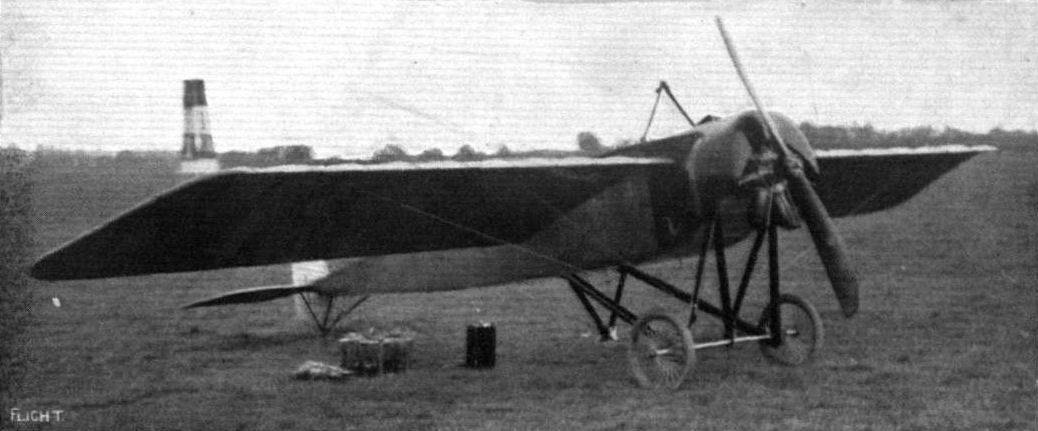
On a recent trip to Windsor I was surprised see my first blue Royal Mail post box, which is located near Windsor Castle where the High Street joins St Alban’s Street. Blue post boxes seem to be a very rare thing indeed and some sources suggest that this may be the last still to be found in the country. Blue post boxes began to be introduced into some British cities and other locations of note in 1930 and were used for postal airmail services to send and receive mail mainly to and from Europe. The blue post box at Windsor Castle, which is near the site of the old Windsor Post Office (1887 – 1966) commemorates the first United Kingdom airmail service. On the 9th September 1911, Gustav Hamel flew a Blériot monoplane (which looks a bit of a death-trap) from Hendon aerodrome in London and landed on the Long Walk behind Windsor Castle. This 19 mile flight took only 18 minutes and his cargo was a sack of mail celebrating the coronation of King George V. Following this first official airmail flight the use of airmail slowly increased and became firmly established in the 1920’s when improved post World War I aircraft and pilots became available to support the service.

The use of these bespoke blue post boxes was short lived however and by the end of 1938 they had fallen out of use. A number of reasons for their withdrawal are citied including: the rise of air travel; the build-up to the Second World War and the re-allocation of aircraft assets; and the cost associated with having bespoke post boxes solely for airmail. Whatever the true reason, come the end of 1938 it was acceptable for airmail to be posted in normal red post boxes and the only reference to the blue boxes remained in the blue airmail stickers that adorned the envelopes of airmail letters.

Gustav Hamel (25 June 1889 – 23 May 1914) who safely delivered the UK’s first airmail in 1911, sadly got “lost in the post” himself. Hamel disappeared on the 23rd May 1914 whilst returning from France in a Morane-Saulnier monoplane that he had just collected. Whilst his aircraft was never found a body was found on the 6th July 1914 by the crew of a fishing vessel in the English Channel near Boulogne. The crew did not retrieve the body, but their description of clothing on the corpse and the fact that one of the personnel effects of the deceased was a road map of southern England led some to conclude that the body was Hamel.

Windsor's commemorative blue airmail post box.


If unusual post boxes are of interest, then Windsor is home to another peculiar example. Located on the High Street next to the Guild Hall is a green hexagonal Penfold post box dating from around 1872. Between 1866 and 1879 green was the standard colour for all British post boxes, however from 1874 they were all re-painted to the now traditional post box red to enable them to be more easily seen.


Pictures: Berkshire (June 2016).

If you find this post interesting please share it using the buttons below.


Wednesday, 16 September 2015

Weird Wessex is here!

Weird Wessex: A Tourist Guide to 100 Strange and Unusual Sights is a journey across the English counties of Wiltshire, Hampshire, Dorset, Somerset, Devon and Berkshire seeking out the weird and sometimes little known sights that wait to be discovered. Have you ever heard of:
  • Somerset's standing stones - the second largest circle of standing stones in Britain?
  • The murderous tale behind Berkshire’s Coombe Gibbet?
  • The Dorset building with a Civil War cannon ball buried in its wall?
  • The Devon village that flips a boulder each year to keep the Devil trapped below ground?
  • The Hampshire shop that once fought in the War of 1812?
  • The home of Wiltshire’s most famous poltergeist?
If not then let Weird Wessex take you there, and treat you to over 200 full-colour photographs of these weird and wonderful locations. You are certain to discover an unusual location that you never knew existed!


Written by Andrew May (of the Retro-Forteana blog) and myself, Weird Wessex is now available at Amazon here!

Please note this book is printed on demand. So if it shows as being “temporarily out of stock” on Amazon do not be perturbed, the printing press will fire up as soon as your order is placed!

Happy exploring!

Saturday, 18 April 2015

The Elephants in the Church

So far on my wanderings I have happened across a number of unusual things in churches and churchyards, some of my favorites to date being The Depressing Chair of Bishops Cannings, The Nether Wallop Pyramid, A Brief History of Bread Prices, A Church Load of Virgins and Finding Sweet FA. Given churches offer such a rich source of oddities I make sure to take a peek in as many churches as I can.

Recently I visited Wickham in Berkshire (not to be confused with Wickham in Hampshire - which is the home of The Shop that Fought in the War of 1812) and had a quick look around St. Swithun's Church.

St. Swithun's Church is notable as its tower dates from the Saxon era and is possibly the oldest example in the country. The church is located near the site of an ancient Roman camp, and recycled Roman tiles and columns can be seen incorporated in to the tower's construction. It is thought that this tower was originally built as a free-standing watch tower, with access to the first floor provided by a ladder that could have been pulled up when the need arose. The main body of the church would have been a later addition to the tower.

The main oddity of interest lies within St. Swithun's Church. As you enter the nave of the church carved angels can be seen decorating the roof beams, which seems to be a fairly standard type of decoration for a church. However, when you move into the north aisle, which houses the church's organ, the roof beams are unusually decorated by eight large golden elephants.

It seems that between 1845 and 1849 the church underwent extensive refurbishment and that the nave, chancel and both the north and south aisles were effectively rebuilt. The person responsible for this work was a William Nicholson, and it was during a visit to an Exhibition in Paris that he is said to have impulsively bought four papier maché elephants to decorate the church. Needing four more elephants to complete the task, Nicholson apparently had another four specially commissioned to finish the new look of the north aisle.

I am guessing that a village church decorated by golden elephants is a bit of a rarity in the United Kingdom, but if you know of another, please let me know.

St Swithun's Church, Wickham, Berkshire.

Angels decorating the roof beams in the nave. The north aisle's elephants can be seen though the archways.

The golden elephants.


Pictures: Berkshire (April 2015).

If you find this post interesting please share it using the buttons below.

Thursday, 22 January 2015

A Grisly Place to Hang Out

On the Test Way footpath near the villages of Coombe and Inkpen in Berkshire, a gibbet can be seen sitting high on the hillside overlooking the surrounding countryside. The gibbet is known locally as Coombe Gibbet and it sits atop Inkpen hill - to be pedantic it actually sits upon a Bronze Age long barrow on the summit of the hill. The original gibbet was apparently erected in this very prominent location in 1676 to display the bodies of two convicted murderers, in an attempt to dissuade other people from committing such crimes.

The murderers in question were a pair of lovers known as George Broomham and Dorothy Newman. It is said that Broomham was married with a son and that Newman was a widow when the pair commenced an illicit relationship. Accounts vary, but it seems that as this illicit relationship progressed Broomham and Newman had cause to murder Broomham’s wife and son. This was probably because divorce in the 17th century was practically impossible, as it required a private Act of Parliament, so bumping off your unwanted wife was by far the more practical option. They committed this crime near the location of the gibbet, and unluckily for them, they were witnessed in the act.

During a trial at Winchester Assizes in February 1676, both Broomham and Newman were convicted of these murders and were sentenced to be publicly hanged. This execution took place in Winchester on 3rd March 1676. Following this hanging, the pair’s bodies were transported to the purpose built gibbet for public display, and their bodies were hung on the 6th March 1676.

The gibbet that stands today is not the original gibbet, but is believed to be the 7th gibbet to stand in this location and was erected in 1992. Previous gibbets erected in 1676, 1850, 1949, 1950, 1970 & 1979 seemed to have fallen prey to either the elements or persons of a vandalous nature.

The gibbet is not the only place of interest in the area, slightly further east along the Test Way footpath is Walbury Hill, which at 297 metres above sea level, is the highest point in South East England. Walbury Hill was once home to the Iron Age hill fort known as Walbury Camp, which was initially constructed circa 600 BC. At its peak the defensive earthworks of Walbury Camp would have protected an area of 80 acres, and the camp would have remained in use until the Roman era.

So if you ever walk the Test Way, be sure to look out for these two interesting features.

Coombe Gibbet visible in the distance.
The gibbet, sited on the long barrow at the summit of Inkpen Hill.
The gibbet.
Looking north from the gibbet into Berkshire.
Looking east from the gibbet towards Walbury Hill.

Pictures: Berkshire (January 2015).

If you find this post interesting please share it using the buttons below.