“Random encounters with the unusual” is a repository for the oddities that me and Mrs J have encountered on our travels, which we find interesting or amusing in some way. Have a look, maybe you will find something interesting or amusing herein.

Showing posts with label Urban Legend. Show all posts

Tuesday, 8 December 2015

St Cuthbert's Cross

In “The Legend of the Durham Dun Cow” I recounted the tale of how the city of Durham was supposedly founded in 995 AD by a band of wandering monks with some help from a long-dead saint and a lost cow. The saint in question was St Cuthbert, who spent his life as a monk on the island of Lindisfarne. Cuthbert died in 687 AD and 11 years after his death, his corpse was found to be miraculously preserved. His tomb soon became a place of pilgrimage and was linked to a number of further miracles which eventually led to Cuthbert’s canonisation.

The monks of Lindisfarne left the island in 875 AD taking Cuthbert’s remains with them, having been driven out by over 80 years of ongoing Viking raids. The monks, along with Cuthbert’s remains, wandered the north of the country (predominantly Northumbria and Scotland, but also going as far south as Ripon) stopping at a number of temporary homes until 995 AD when they finally settled in what is modern day Durham.

It is because of these wanderings that a number of locations in the north of the country have become linked with the remains of St Cuthbert, and there are a number of churches in the region dedicated to the saint.

Having read about the legend of St Cuthbert and the wanderings of his remains, from their original home on the east coast of England, I was recently surprised to find a memorial to St Cuthbert on the west coast in the Lancashire seaside town of Lytham. On Church Road in front of the playing field there is a stone cross by the side of the road which bears a metal plaque. The plaque reads "According to ancient tradition the body of St Cuthbert about the year 882 once rested here."

Whether St Cuthbert’s remains actually did travel from Lindisfarne to Lytham is unclear, as all of the popular re-tellings of this tale that I have read do not seem to include a visit to the west coast. But the locals of Lytham clearly seem to believe this legend and unsurprisingly the nearby church is also dedicated to St Cuthbert!

St Cuthbert's cross in Lytham; did St Cuthbert's body once stop here in 882 AD on its journey from Lindisfarne to Durham?


Pictures: Lancashire (November 2015).

If you find this post interesting please share it using the buttons below.

Tuesday, 15 September 2015

The Gypsy Curse of Odstock

The pictures below show a grave in St Mary’s churchyard in the village of Odstock in Wiltshire. The grave belongs to a man named Joshua Scamp who was a gypsy and a convicted criminal.  The inscription reads:

In memory of Joshua Scamp
Who died April 1st 1801
May his brave deed be remembered
To his credit here and hereafter

Joshua Scamp's death and his subsequent burial in St Mary's churchyard are linked to an odd local legend, a legend about a gypsy curse. The details of the story differ slightly, depending on the source, but the general theme is as follows. In 1801 a local  gypsy named Joshua Scamp was condemned to death and hanged at Fisherton gaol in Salisbury for the crime of the theft of a horse.  As it turns out Joshua was not the perpetrator of the crime, it was his son-in-law who actually stole the horse. It is said that Joshua decided to take the blame for the crime and suffer the associated punishment to protect his daughter (presumably from losing her husband).  When it became clear that Joshua was in fact innocent of the crime he became a local hero to the gypsy community and the anniversary of his passing was celebrated each year by a party at his graveside.

Not being too keen on gypsy revellers holding their annual celebration in the churchyard, the church officials of the time, supported by local authorities, uprooted a rose bush planted by Scamp's grave and locked the church door to keep the gypsies out. In retaliation to this affront, a Gypsy Queen supposedly placed a curse on the church, so that anyone who locked the church in the future would die a sudden and untimely death.

Any untimely deaths of church key-holders clearly cannot be attributed to the gypsy curse with any degree of certainty. However it seems that the legend of the curse may have left a lasting impression. It is said that in the 20th Century, following the untimely deaths of two Church Wardens, that the Rector threw the key to the church door into the River Ebble where it presumably remains to this day.

St Mary's Church was unlocked when I paid my visit, so perhaps the current Church Warden is taking a cautious approach to the legend?

St Mary's Church, Odstock.


Joshua Scamp's grave stone and rose bush.


The inscription.

Inside the church.


Pictures: Wiltshire (August 2015).

If you find this post interesting please share it using the buttons below.

Friday, 30 January 2015

The Winchester Round Table

The building pictured below is “the Great Hall” in Winchester, which is all that remains today of Winchester Castle. The castle was originally built in 1067 for William the Conqueror, and it was improved over the years with the Great Hall that stands today being built in the early 1200's to replace the castle’s previous hall.

The castle’s downfall occurred during the English Civil War in 1646, when Parliamentarians captured the castle from Royalist forces. Following this victory Oliver Cromwell had the castle demolished. The Great Hall was given a stay of execution and the building was preserved as a venue for assemblies and the County Assizes.

Over its lifetime the Great Hall has been the venue of some important events. In 1603 Sir Walter Raleigh stood trial at the Great Hall for his suspected part in the plot to remove King James I from the throne. In 1685 Judge Jeffreys condemned supporters of the Duke of Monmouth to death as part of the Bloody Assizes. And more recently in 1954 Lord Montagu of Beaulieu, Major Michael Augustus Lane-Fox Pitt-Rivers and Peter Wildeblood were tried and convicted in the Great Hall on charges of “conspiracy to incite certain male persons to commit serious offences with male persons” , or buggery for short!

The most striking feature of the Great Hall is the Arthurian Round Table which hangs at one end of the hall. The table is believed to have been constructed around 1250 to 1290, during the reign of Edward I. The current paintwork on the table was commissioned by Henry VIII for the visit of the Holy Roman Emperor Charles V in 1522. The artwork shows the names of 24 knights of King Arthur’s court and shows Henry VIII sitting in King Arthur's seat at the 12 o’clock position. At 18 feet in diameter, the round table would have been an imposing piece of furniture.

Across Europe during the Middle Ages Arthurian legend was popular and jousting festivals, called “Round Tables”, were occasionally held. Sometimes at these events competing knights would assume the identities of characters from Arthurian Legend and presumably also replica round tables were made for these events. Edward I was himself believed to be an Arthurian enthusiast and to have attended a number of Round Tables and to have even hosted one himself in 1299. So it is possible that the Winchester Round Table was created for this event, however, there is also evidence that it was created for a tournament in 1290 to mark the betrothal of one of his daughters.

The Winchester Round Table is clearly not the original table at which Arthur and his court are said to have convened, some theories even suggest that the round table of legend was not a table at all. However, the Winchester Round Table is perhaps one of the earliest surviving replicas still in existence.

If anyone knows of any other round tables in existence from the Middle Ages that are on display in Europe, let me know via the comments section.

The Great Hall in Winchester.
The Winchester Round Table.
Henry VIII presiding over the table.
Looking towards the east wall of the Great Hall, where the table hung from 1348 to 1873.
The east wall is decorated with the names of Hampshire's Knights and MPs.

Pictures: Hampshire (January 2015).

If you find this post interesting please share it using the buttons below.


Wednesday, 25 July 2012

The Weymouth Cannon Ball

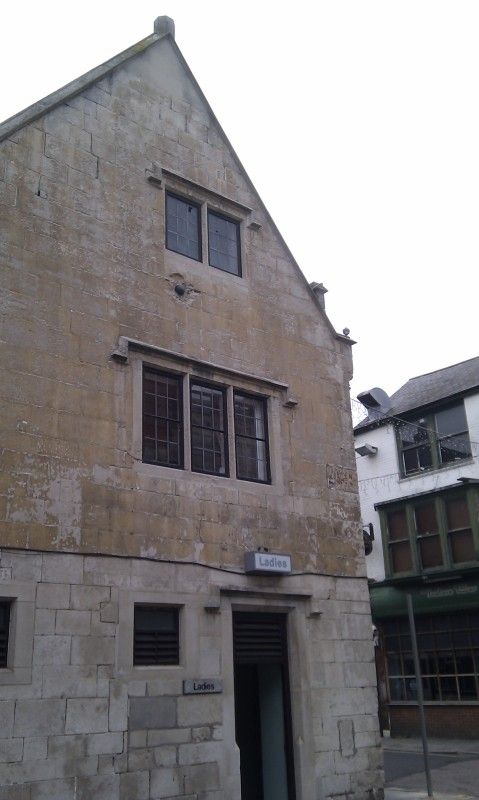
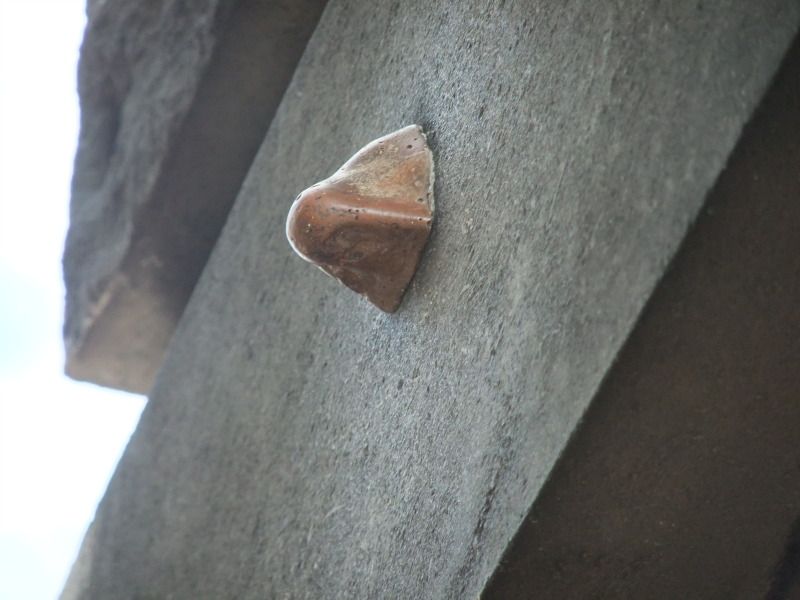
In Weymouth on Maiden Street, there is a building which today is a public convenience. When looking at this building, if you happen to glance upwards, you may notice what appears to be a cannon ball lodged in the wall of the building.

During the English Civil war in the 1640’s, there was a plot by royalist sympathisers loyal to King Charles I, known as the Crabchurch Conspiracy. The ultimate aim of the plot was to secure a port to allow the King to land a force of French soldiers to bolster his chances of winning the war. This attempt to secure a port (Weymouth) led to some extensive fighting in the town, with a force of circa 1000 Roundheads pitched against a force of circa 6000 Royalists. It is commonly believed that the cannon ball found its way into the wall during this battle.


Pictures, Weymouth (June 2012).

Saturday, 23 June 2012

Soho Body Parts

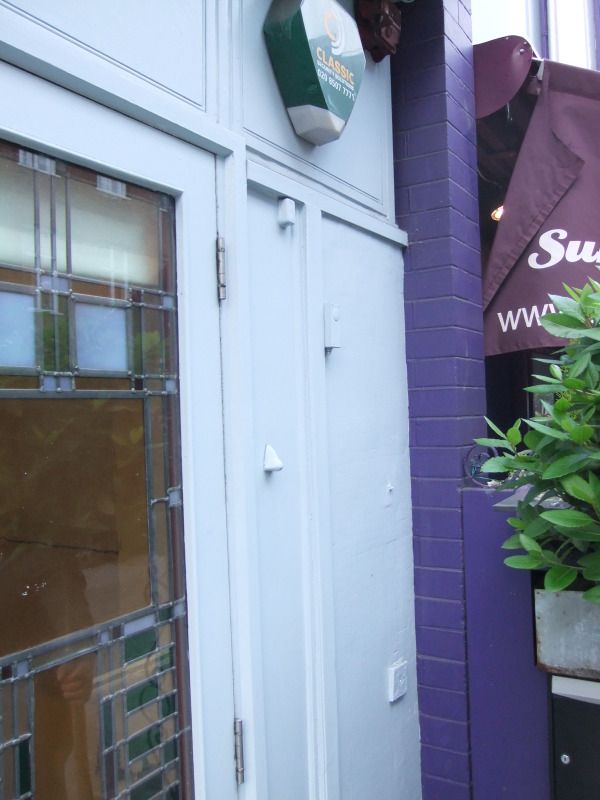
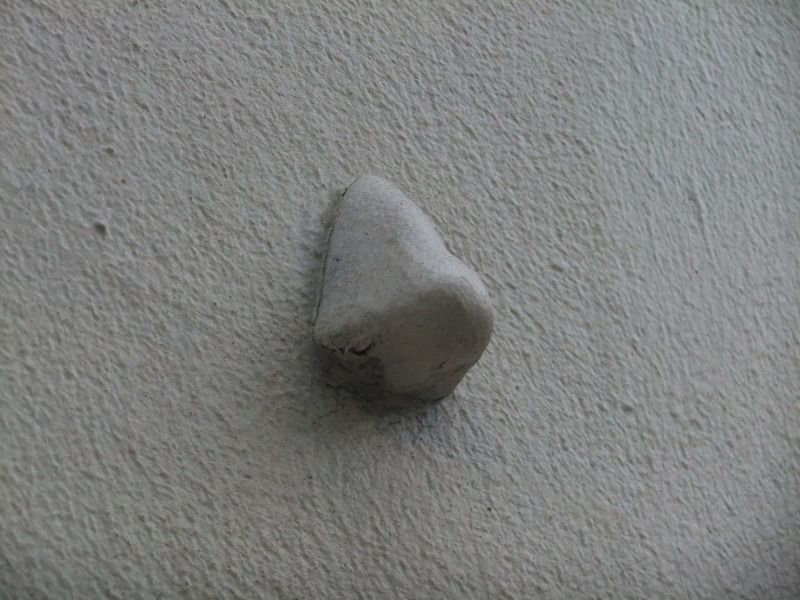
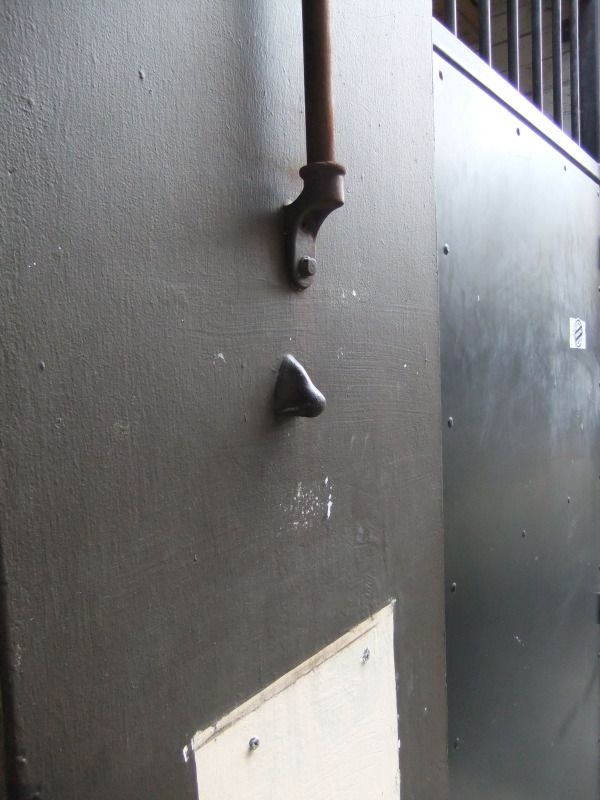
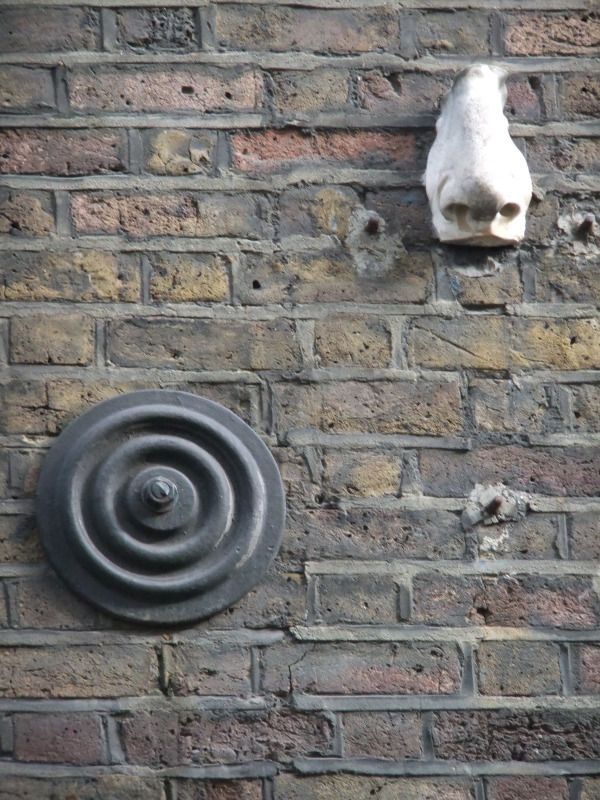
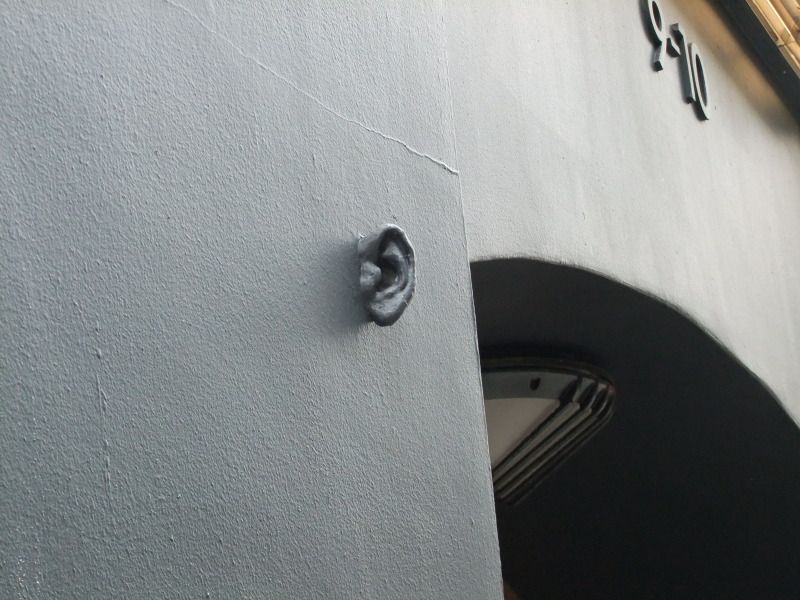
Walking around London, the observant wanderer may notice the occasional body part, mostly life-size noses, stuck to the sides of buildings. On a recent visit to London, Mrs J and I came across 5 noses and 1 ear, all of which are shown below.

It seems that the majority of these noses were planted by artist Rick Buckley in 1997 as a protest against the rise of the "Big Brother" society (nosiness?). Originally 35 life-size casts of the artist’s nose were appended to landmarks that included the National Gallery, Tate Britain and the South Bank Centre, however it seems only a few now remain.

The existence of the noses has led to the rise of some urban legends. One legend revolves around the nose in Admiralty Arch, which is supposedly modelled on Napoleon's and is placed at a height to enable cavalry troopers to tweak it as they passed by. A more popular urban legend states that there are seven noses in Soho and if you can find all seven you will have eternal wealth.

It’s a shame really that Mrs J and I only found five noses, eternal wealth would have been rather handy!


Nose, Admiralty Arch (not really Soho).


Nose, Dean Street.


Nose, Endell Street.


Nose, Bateman Street.


Nose, Meard Street. 

Unlike the rest of the noses, the Meard Street nose is flesh coloured, much larger in size, and has a different profile. The nose is also high up on the wall, as opposed to being at eye level, like the rest of the noses. This nose is not part of the original batch.

Ear, Floral Street.


Pictures, London (May 2012).